
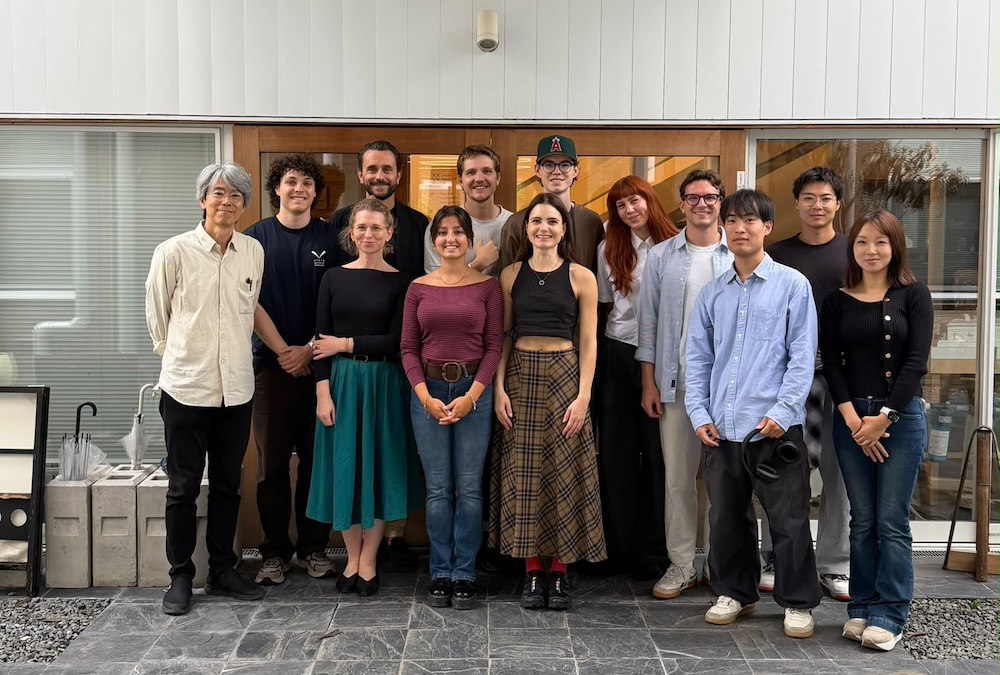
Students from Kyoto and Cologne at the CUBITY Atelier House in Merzenich
Eleven architecture students from Kyoto and Cologne are designing temporary architecture for the landscape between Bürgewald and the Hambach open-pit mine. From November 16 to 19, 2026, they will work at the CUBITY Atelier House of the Britta and Ulrich Findeisen Foundation for Art and Architecture in Merzenich. Their workshop, “Edge Conditions,” explores how architecture can recall a place’s history and respond to its transformation.
The workshop is part of the exchange between the Faculty of Architecture at TH Köln and the Kyoto Institute of Technology (KIT). Following their time together in Kyoto, the students will continue their collaboration in Germany from November 16 to 25. At CUBITY, they will also share their daily lives for several days, living and working together in a building that itself began as a student architecture project.
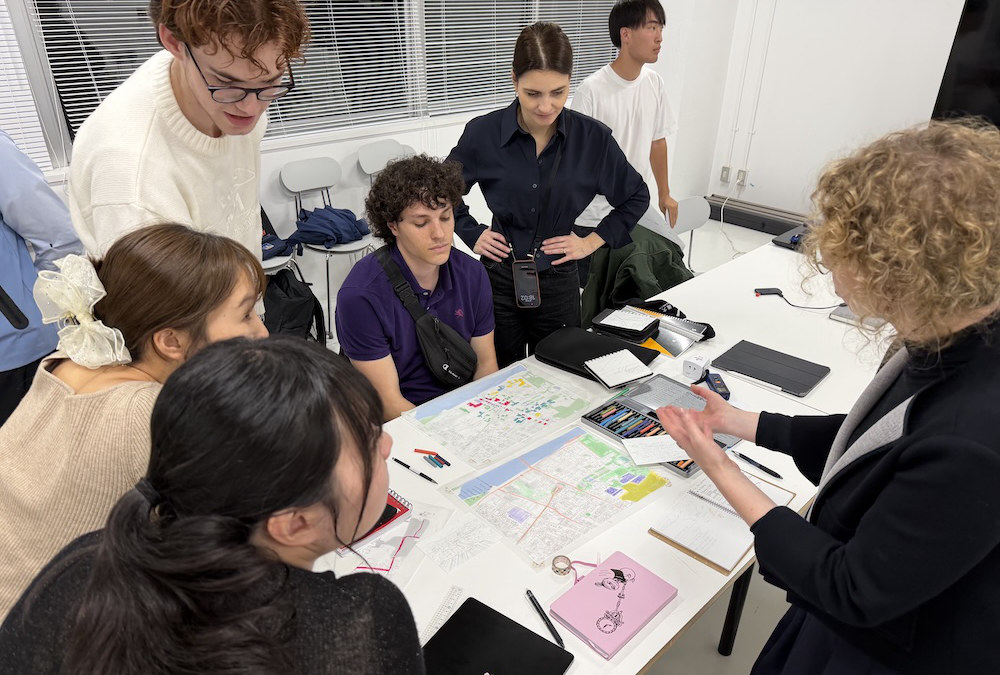
Discussing their designs: Students from TH Köln and the Kyoto Institute of Technology (KIT) develop their ideas together during the workshop in Kyoto.
An Exchange Built on Lasting Connections
The architecture faculties in Cologne and Kyoto have been working together for more than ten years. Reciprocal visits and joint design workshops allow students to question their own understanding of architecture by exploring different places and exchanging perspectives. This collaboration takes place within the wider context of the city partnership between Cologne and Kyoto, established in 1963.
On the German side, the exchange is led by Prof. Sabine Tastel and Prof. Fabian Storch, supported by research associate Sara Nitsche. On the Japanese side, Prof. Dr. Akira Kakuda and Prof. Dr. Hiroaki Kimura supervise the students. According to the current participant list, five students from KIT and six from TH Köln will work together. The encounters in both countries combine collaborative design work with an understanding of different spatial and social contexts.
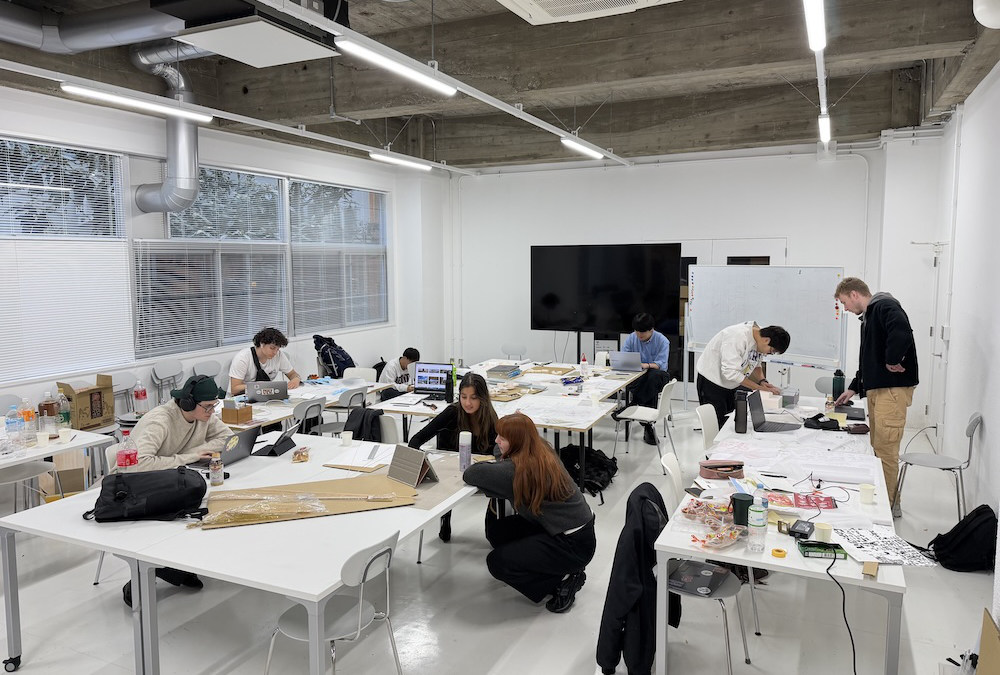
From idea to design: During the workshop in Kyoto, students from both universities develop their concepts using drawings, models and digital tools.
Since 2023, the Findeisen Foundation has supported the international architecture exchange between TH Köln and the Kyoto Institute of Technology. That year, it also hosted the two Japanese professors. In 2024, the foundation provided a travel grant for the students’ study trip to Japan. Its research associate Sharon Nathan joined the trip in 2024 and gained firsthand experience of their collaborative work. The upcoming stay in Merzenich builds on these personal encounters and an established partnership.
Edge Conditions – A Design Challenge in the Rhenish Mining District
Between the center of Bürgewald, formerly known as Morschenich-Alt, and the current edge of the Hambach open-pit mine, the students will identify a site for a temporary structure. Their designs should address the history of the place, the effects of lignite mining and resettlement, and the ongoing transformation of the landscape. They will choose the location, scale and use themselves, explaining their decisions in relation to local conditions.
The brief focuses specifically on the landscape as it can be experienced today and the changes currently taking place. The planned lake that will eventually occupy the mine is not part of the design task. Working in groups of two or three, the students will explore how memory, landscape and social change interact. They will present their ideas through drawings, models and short concept statements. The final presentation is scheduled for November 25 at TH Köln.
A visit to CUBITY by Georg Gelhausen, Mayor of Merzenich, is also planned. The students will have the opportunity to discuss Bürgewald’s future with him and learn about the issues the municipality faces as it develops the village.
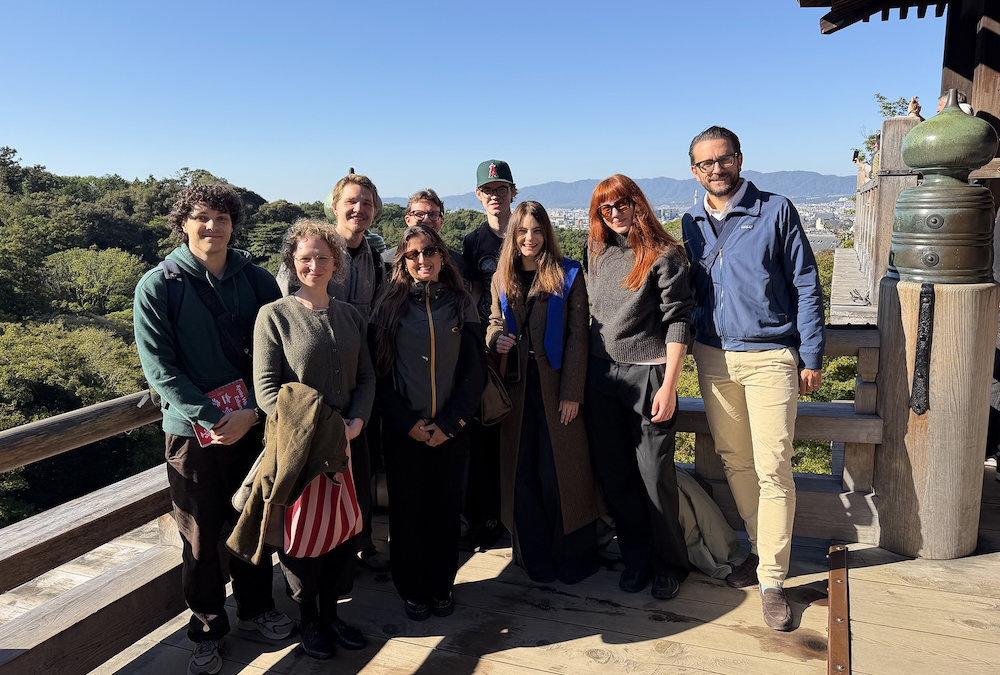
Experiencing architecture beyond the workshop: The TH Köln group explores Kyoto and gains insights into the architectural culture of Cologne’s Japanese partner city.
Experiencing Sustainable Architecture in Everyday Life
CUBITY itself also offers inspiration for the design process. Students at TU Darmstadt developed the building for the Solar Decathlon Europe 2014 as the world’s first energy-plus student residence. The design combines low energy use with an exploration of how much private space people need and what shared spaces can offer.
Twelve compact living cubes are arranged around an open communal area known as the “marketplace.” Spaces for privacy and social interaction sit close together. Those living and working in the building experience directly how spatial decisions shape everyday life. The shared area becomes both a workspace and a meeting place, requiring consideration for others and mutual understanding.
The building’s history also illustrates its resource-conscious approach. When CUBITY was relocated from Frankfurt to Merzenich in 2022, around 95 percent of its building components were reused. It demonstrates how an existing structure can continue to serve a purpose at a new location. Responsible use of building materials is evident in the building itself.
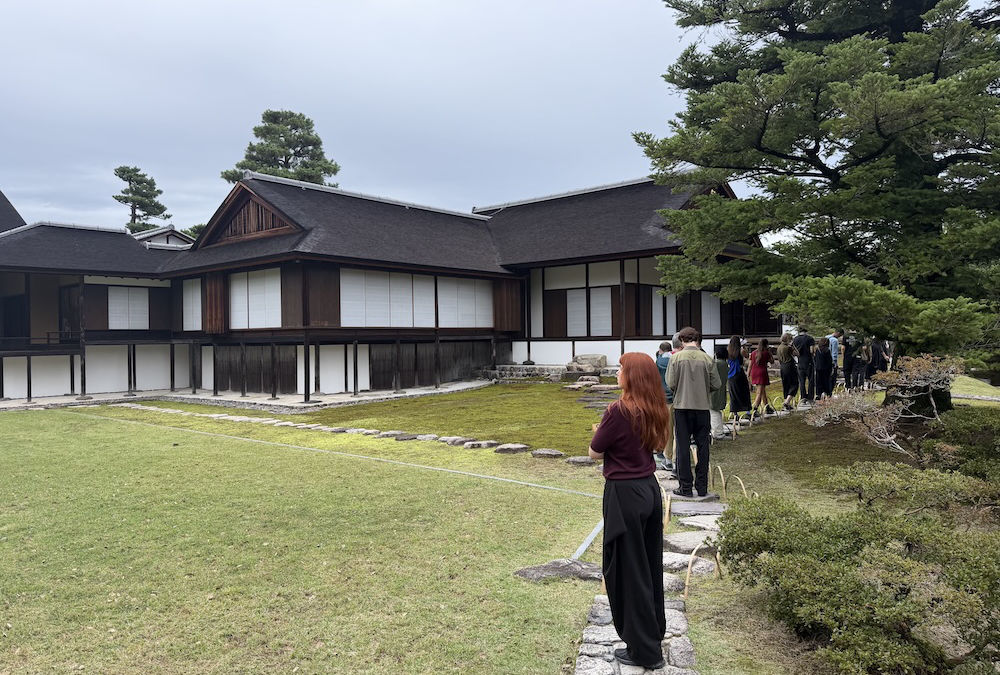
During a visit to the Katsura Imperial Villa in Kyoto, the group explores the relationship between traditional Japanese architecture and garden design.
A Promise to the Future
At CUBITY, the group will share communal spaces, divide tasks and find ways to accommodate different habits. A guide provided by the foundation invites the students to develop a shared agreement for the future. Under the title “A Promise to the Future,” they will set out the principles they wish to follow together and put them into practice during their stay.
The agreement is voluntary. It is intended to help the group establish arrangements for everyday life and take responsibility for the building. Living together will reveal which rules work well and where expectations differ. In this way, the question of how to use shared space will also inform their design work.
Following their stay, we will share a more detailed look at the ideas developed, the collaborative work and the group’s time at CUBITY.