
What remains when an open-pit mine comes to an end, villages lose their traditional role, and an entire region must renegotiate its future? In Germany’s Rhenish mining district, these questions cannot be answered solely in meeting rooms, funding applications, or long-term development plans. They require places where people come together, share experiences, address conflicts, and collaboratively develop new ideas. This is precisely what tu! Hambach 2026 represented.
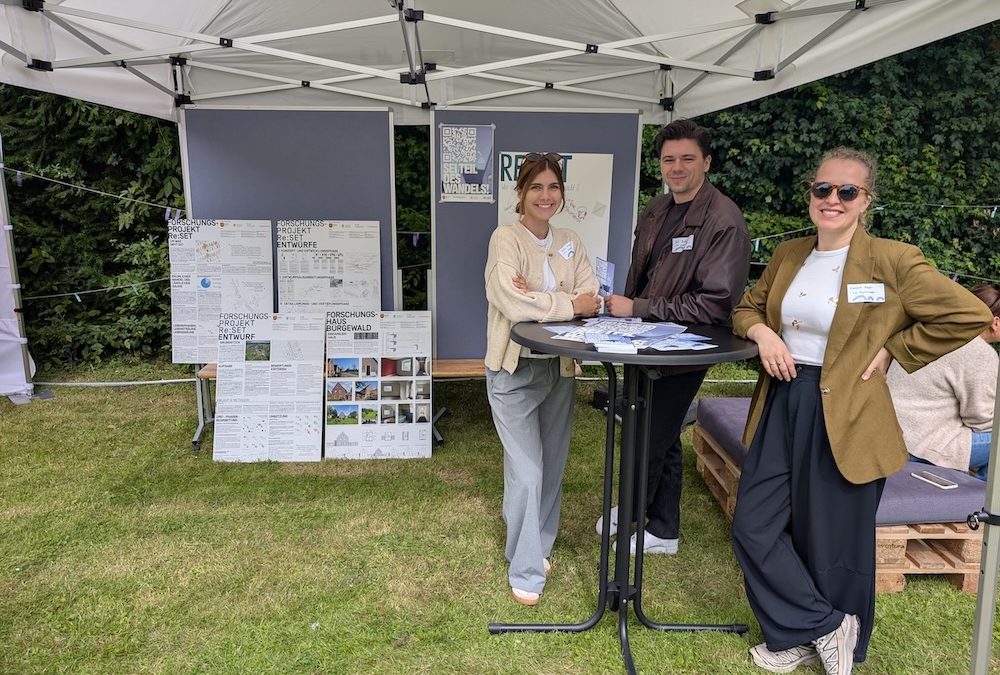
At tu! Hambach, TU Darmstadt presented the Re:SET research project on the future of vacant single-family homes in Bürgewald. © Sharon Nathan
From June 10 to June 14, Bürgewald, together with several other locations across the Rhenish mining district, once again became a Temporary University. Former kindergartens, churches, barns, the Neesenhof farm, the edge of the open-pit mine, and the Old Malt Factory in Buir were transformed into a vibrant collaborative workspace dedicated to the pressing questions of structural transformation. tu! Hambach demonstrated that transformation is not merely an infrastructural or economic challenge. It also concerns memories, landscapes, professional biographies, housing, mobility, culture, and ultimately the question of who gets to shape the future of a region.
tu! Hambach: A Program Bridging Research, Everyday Life, and Future Visions
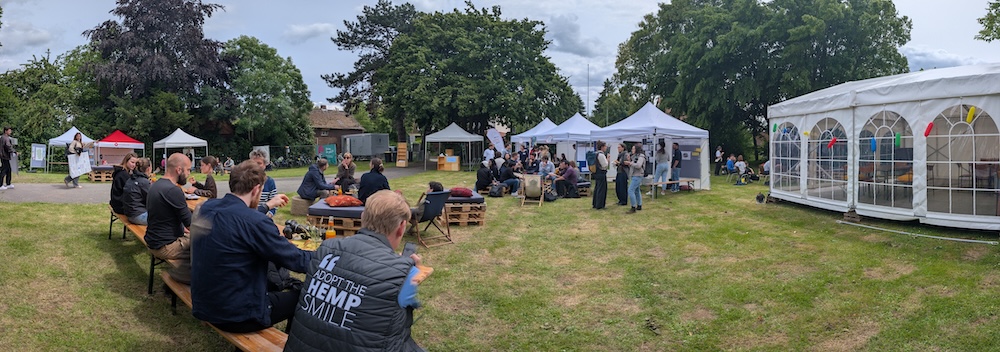
tu! Hambach builds on an idea first developed through the REVIERatelier Hambach: science, civil society, public administration, politics, culture, and local initiatives should not work alongside one another but engage in direct dialogue. This openness was once again reflected in the diversity of participants in 2026. More than 70 institutions and individuals contributed to a program of workshops, exhibitions, lectures, panel discussions, excursions, participatory activities, and cultural events.
tu! Hambach 2026 transformed the Rhenish mining region into an open workspace for structural transformation, where people from academia, politics, and civil society came together to develop ideas for the region’s future. © Sharon Nathan
The topics ranged from sustainable construction, energy, and mobility to village development, cultural memory, tourism, gender equality, civic participation, and regional identity. Students, researchers, municipal representatives, associations, schools, grassroots initiatives, artists, and local residents gathered to share different perspectives on the future of the Rhenish mining district.
This diversity became one of the defining strengths of tu! Hambach. Rather than presenting a finished master plan, it created a space where ideas could be tested, experiences exchanged, and open questions explored collectively.
Participation as a Key Question of Structural Change
One of the central themes focused on how citizens can actively shape structural transformation instead of merely observing it. A workshop with Member of the State Parliament Antje Grothus opened an important space for discussing the history of environmental activism in the region and exploring how meaningful public participation can be ensured for the future visions of local communities.
The Rhenish Mining District as a Living, Evolving Home
This question is particularly significant in the Rhenish mining district. For many people, transformation is not an abstract concept but something they experience directly in their daily lives through resettlement, changing landscapes, new working environments, vacant buildings, and uncertainty about what their communities will become.
The discussions highlighted that participation cannot be reduced to a one-time consultation. Instead, it must be organized as a long-term, transparent, and binding process that enables individual ideas to evolve into genuine collective agency.
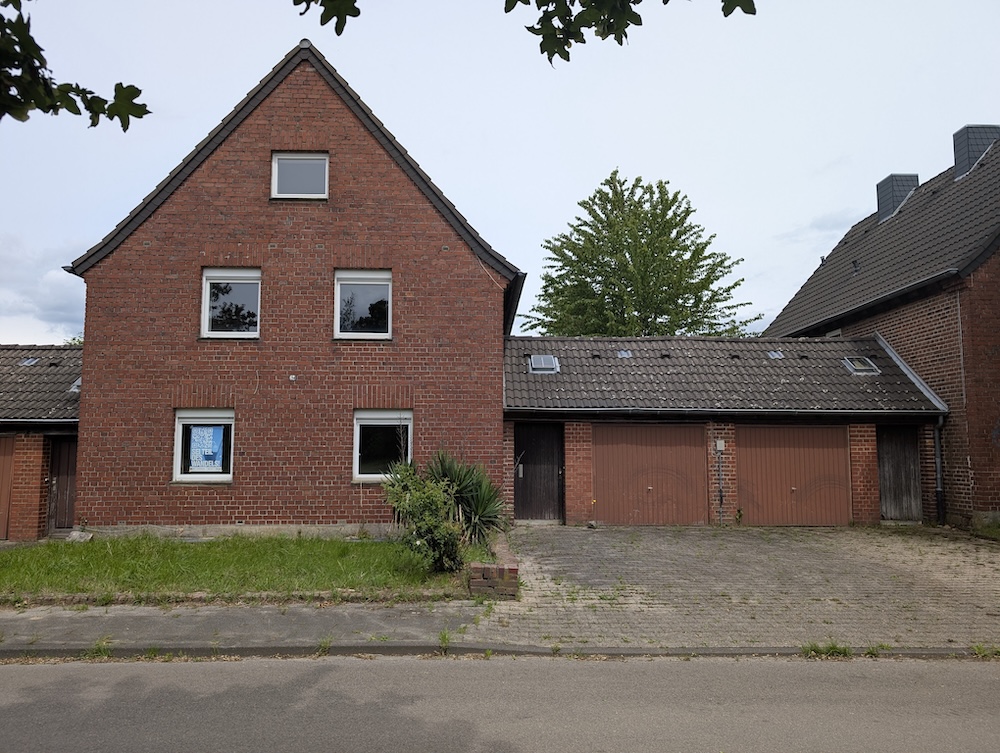
The Rhenish mining region in transition. @Sharon Nathan
The Old Malt Factory in Buir: A Place of Arrival and Future Possibilities
On Saturday, tu! Hambach moved to the Old Malt Factory in Buir. The former industrial complex itself became the subject of discussion: What future can emerge from a historic site that visibly reflects the region’s industrial heritage while occupying a strategic location at the future edge of the open-pit mining landscape?
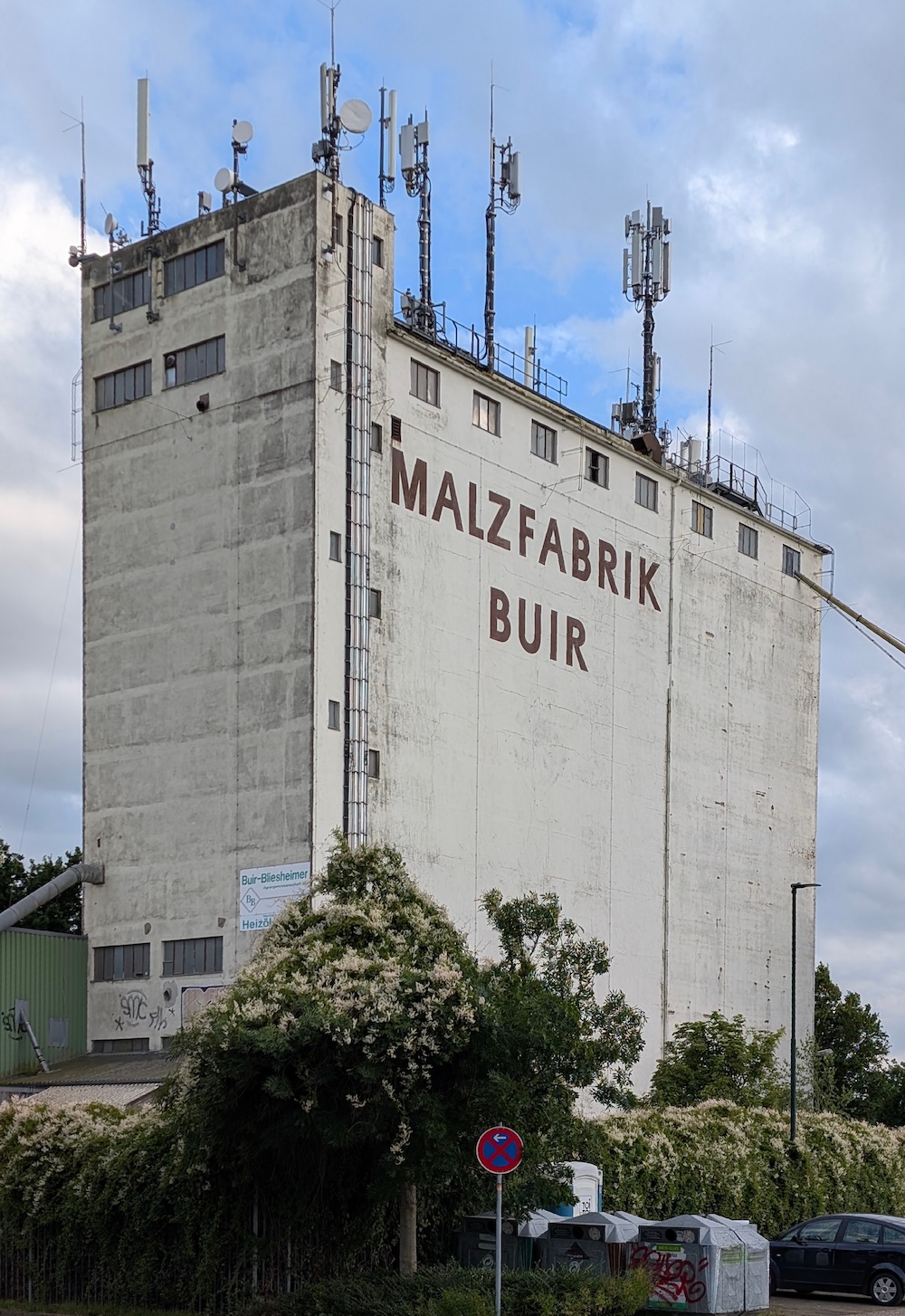
Old Malt Factory Buir. @ Sharon Nathan
Under the title “ARRIVAL. FUTURE. Malt Factory Buir. A Place for Change and Collective Action,” local residents, experts, community initiatives, and political representatives came together. Among the panel guests was North Rhine-Westphalia’s Minister for Economic Affairs, Mona Neubaur. Afterwards, participants developed and discussed ideas for Buir, Bürgewald, and Manheim-alt at open discussion tables and interactive idea boards.
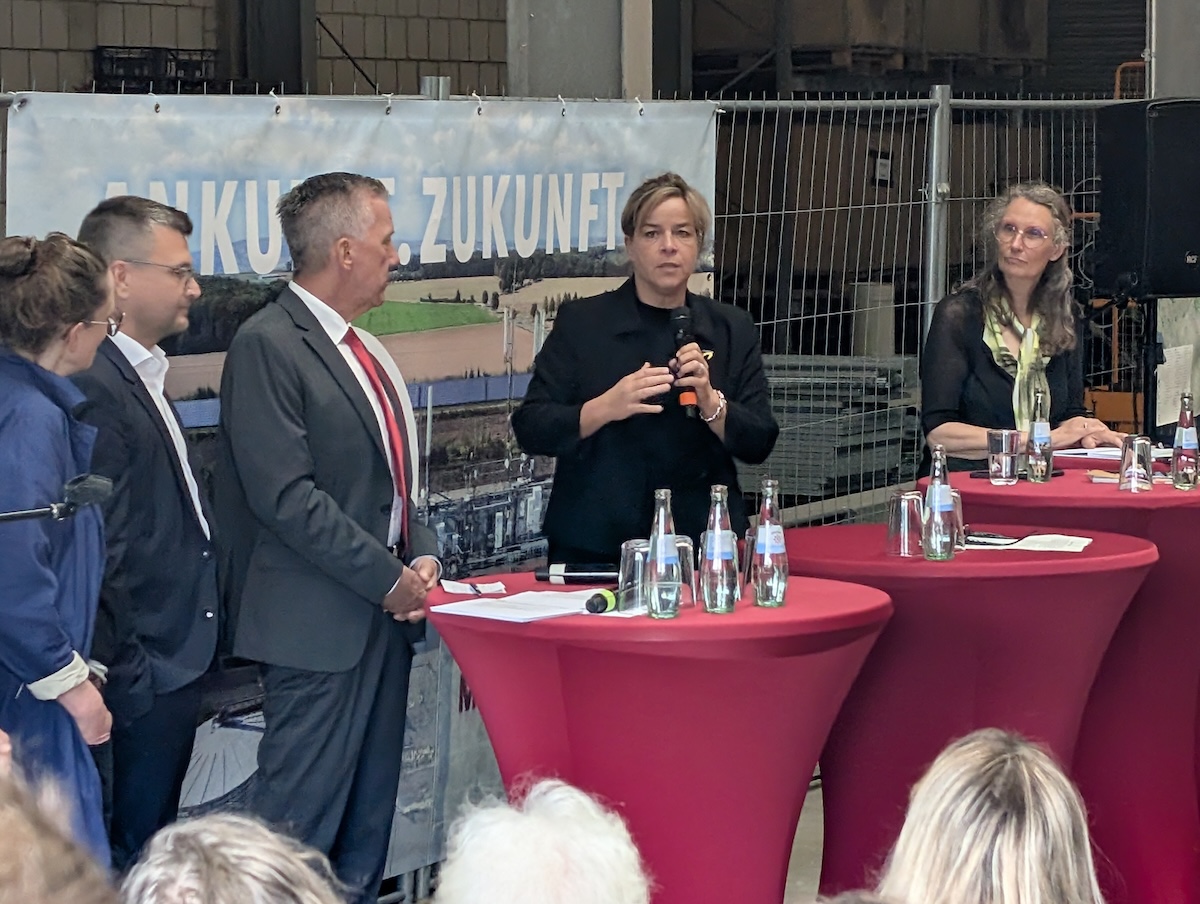
In conversation with North Rhine-Westphalia’s Minister for Economic Affairs Mona Neubaur and Member of the State Parliament Antje Grothus (from left to right). © Sharon Nathan
Particularly striking was the discussion surrounding the silo tower of the former malt factory. Already serving as a visible landmark marking the entrance to Buir, the tower became the focus of conversations about its future reuse. Visitors were invited to tour the structure while discussing whether it could become more than an industrial relic: perhaps a center for knowledge and local history, exhibitions, community encounters, tourism, or democratic participation.
Re:SET: A Pioneer Project in the “Village of the Future” Bürgewald
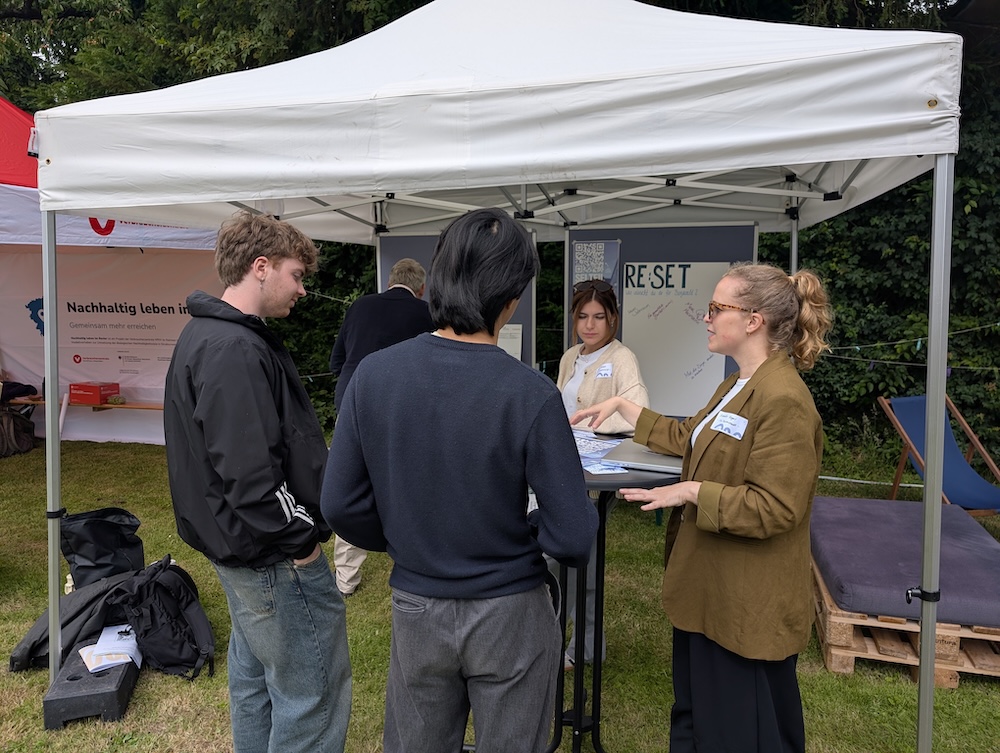
TU Darmstadt also contributed an important impulse through its interdisciplinary research project Re:SET. At an interactive information booth, Julia Knapp and Karolin Kegel introduced the project and invited visitors to contribute their own ideas, wishes, and perspectives.
Re:SET explores how vacant single-family houses in Bürgewald can be transformed into sustainable assets for the future. Equal attention is given to social, ecological, and economic aspects. How can existing buildings be adapted for flexible new uses? Which energy-saving potentials can be unlocked? And how can former private homes become building blocks of a new and vibrant local identity?
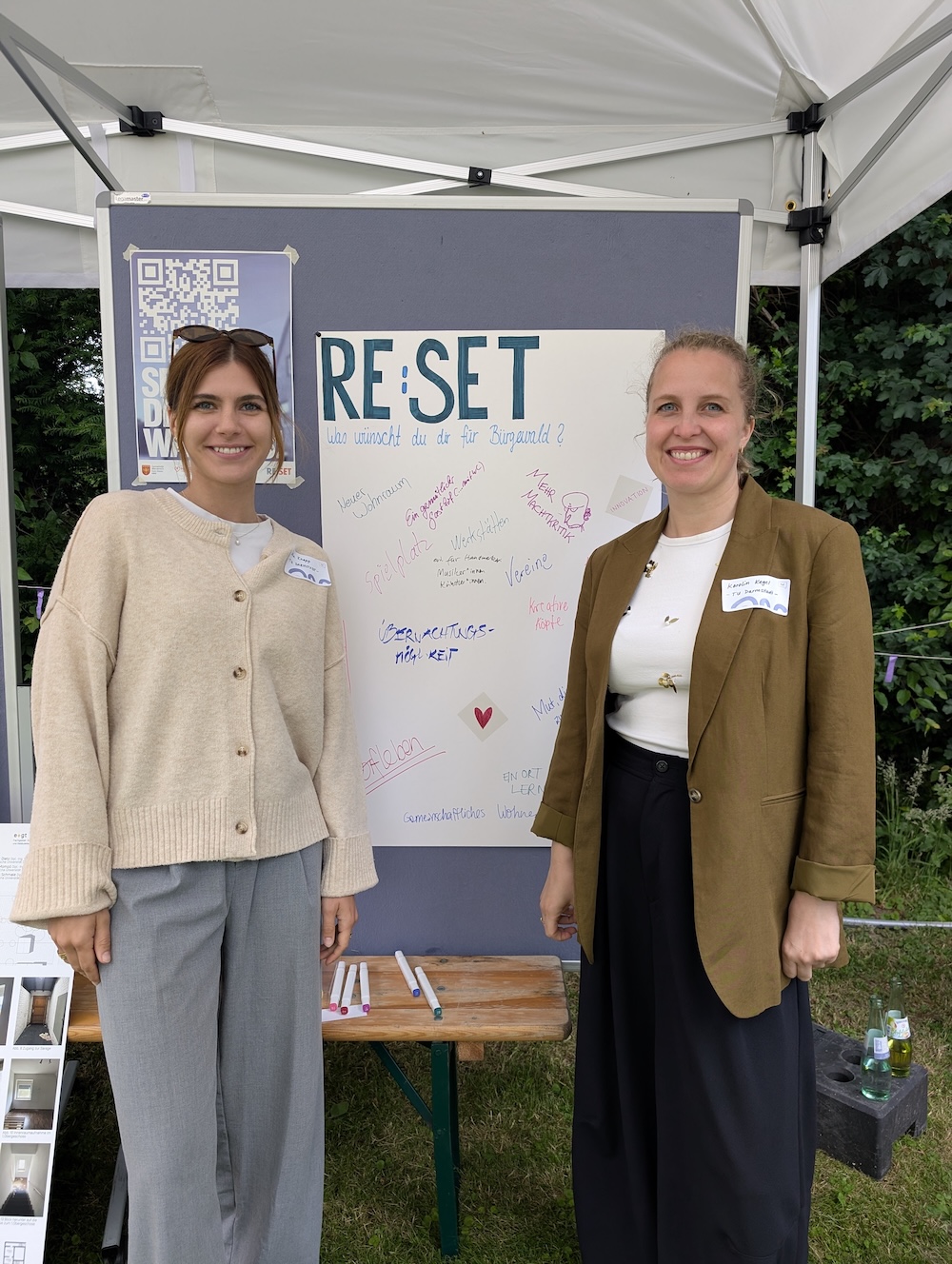
TU Darmstadt’s Re research project contributed fresh ideas to tu! Hambach. At the interactive booth, visitors discussed the future of vacant single-family homes in Bürgewald with Julia Knapp and Karolin Kegel. © Sharon Nathan
The project was developed at the Department of Design and Building Technology at TU Darmstadt under the direction of Professor Anett-Maud Joppien. Visitors did more than gather information—they actively participated through discussions, an online survey, sketches, and an interactive ideas wall. In doing so, the research project itself became a space for participation, where scientific inquiry and local knowledge did not simply meet but were productively combined.
CUBITY Atelierhaus: A Space for Exchange and Collaboration
The spirit of tu! Hambach extended well beyond its official program. Many participants and organizers used the CUBITY Atelierhaus as a temporary workspace and place to stay, with several spending the night on site. As a result, conversations and collaborative work naturally continued into the evening.
After the public events had concluded each day, workshops were prepared, experiences reflected upon, new contacts strengthened, and plans for the following day organized. In this way, CUBITY itself became an integral part of the Temporary University. It offered not only accommodation but also the infrastructure needed for practical collaboration among people who normally work in different institutions, cities, and professional fields.